

Vinyl to Hardie on a 1950s Tulsa house
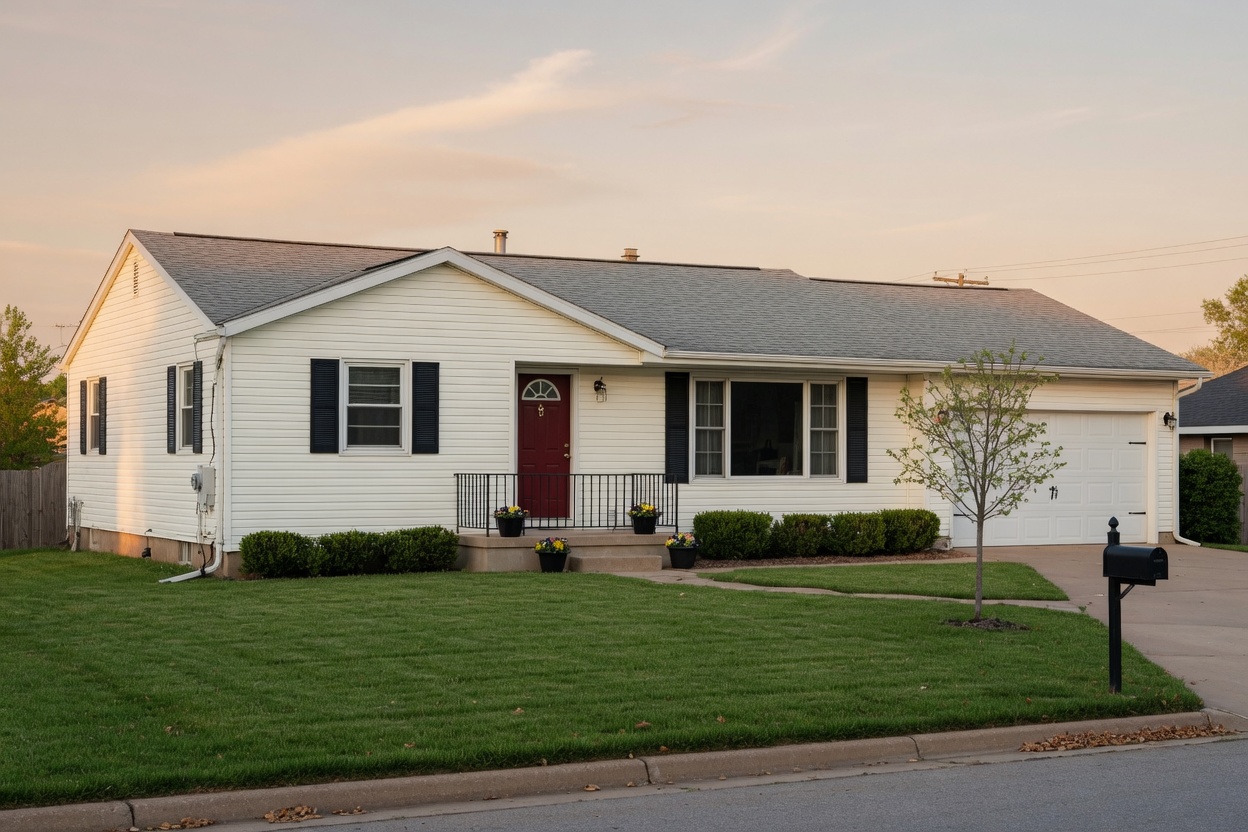
A lot of mid-century Tulsa houses still wear vinyl from a later remodel. When that skin fails, homeowners keep choosing Hardie.
Article Summary
- Mid-century Tulsa houses often wear later vinyl that is now failing
- J. S. Wagner chose Hardie after meeting Steve at Tulsa Renew
- Storm leaks and rotted SmartSide show the wall underneath
- New vinyl is cheaper. Hardie is the longer skin on a 1950s house
- Start with Tulsa Renew, then compare one more written bid
PRO TIP On a 1950s house, ask the estimator what they expect to find under the vinyl before they give you a firm number. Soft sheathing changes the price.
PRO TIP Make tear-off its own line on the bid. A reside over failing vinyl can hide the same leak and cover it with a nicer board.
Why this swap keeps showing up
Tulsa has a lot of houses from the late 1940s and 1950s. Many of those walls started as wood. A later owner wrapped them in vinyl in the 1980s or 1990s because vinyl was cheaper than another paint cycle and looked finished from the street.
Twenty or thirty Oklahoma summers later, that vinyl is chalked, loose at the corners, and tired of hail. The house under it is still a good house. The skin is not.
That is why the same job keeps showing up when Tulsa homeowners write about their walls. The vinyl comes off. Someone looks at the wrap. Hardie goes on. If that is the house you live in, you are not shopping a brochure. You are deciding how to open a mid-century wall and what to hang next.
A 1950 house on the record
J. S. Wagner was already in the middle of a larger restoration when he got to the siding. The vinyl on his 1950-era home was aged and failing. He sat down with Steve, the owner at Tulsa Renew, and chose Hardie Boards.
I undertook a major restoration of my 1950-era home a few months ago. One component of that restoration was to replace the aged and failing vinyl siding. I decided upon Hardie Boards after meeting with Steve (company owner).
He names the year of the house, the old product, the new product, and the owner he met. That is the whole decision in four sentences. A mid-century Tulsa house, later vinyl that had failed, and Hardie after a meeting instead of a materials sheet in the mail.
If your street looks like that, start the same way. Have the person who will own the job walk the house with you. Ask what they expect to find when the vinyl comes off. A 1950s wall can hide original wood, an old wrap, or more than one layer of siding. The meeting is how you find out before the dumpster arrives.
What the tear-off actually shows
Vinyl can hide a wet wall for a long time. Tyler Akins found that out in a rainstorm, not on a sales call.
Our aging siding failed during a rainstorm causing a massive leak in our house. Steven and his team removed several layers of old siding, replaced sheathing, installed HardiePlank.
Several layers came off. The sheathing had to be replaced. Then HardiePlank went on. The leak was not a caulk problem. The wall had to be opened. That is the job a reside over old vinyl would have missed.
Jason Rowland had a different old skin. His LP SmartSide had rotted. Tulsa Renew took it off and hung James Hardie. Different product, same lesson: the bid has to pay for what you find under the first layer, not only for the new boards.
Ask the estimator, in writing, what happens if the wrap is wet or the sheathing is soft. A number that assumes a clean tear-off on a 1950s house is a guess. A number that includes an allowance, or a written process for wet wood, is a bid you can live with. More on that kind of storm week is in When Oklahoma rain finds the wrap.
Hardie versus hanging vinyl again
New vinyl is still the lower bid, and it is a real choice on this list. Burnett homeowners have written about vinyl that still looked new after twenty years of Oklahoma wind. McCann’s homeowners have written about storm-week siding, gutters, and a crew that finished after hail. If the budget is the wall, vinyl can be the honest answer.
Hardie costs more up front. It is fiber cement. It takes hail and heat better than thin vinyl, and it does not read as a 1990s remodel on a 1950s house. That is why Wagner picked it after sitting with Steve. Emily Coatney, who hired Tulsa Renew for siding and windows, put the price in plain language: they are not the cheapest, and she wrote that they were worth every cent.
If you want the materials side by side before you call, read vinyl, fiber cement, and the Hardie board guide. Then bring those pages to the estimate and ask which product the crew hangs every week, not which one is on the website.
What belongs on the written bid
A vinyl-to-Hardie job is more than a product name and a total. Put these lines on the page before you sign.
- Tear-off of the existing vinyl, not a reside over it unless you asked for that.
- Housewrap and flashing as their own lines, not buried in “labor.”
- A sheathing repair allowance, or a written process for wet wood.
- The Hardie product (HardiePlank or panel), color, and trim.
- Paint or factory finish, plus how it meets brick, soffit, and windows.
- Dumpster, start window, and who is on the crew that week.
If wrap and flashing are missing, the cheap number is usually a thinner scope. Read those lines on the written estimate, not only the bottom total. For the day-to-day of living through the job, read Daily notes from a siding job.
Who to call in Tulsa
Tulsa Renew states it is the only James Hardie Preferred siding contractor in Tulsa. Owner Steven Jones is the person Wagner met. Start there if Hardie is the material you want on a mid-century house.
Other shops on the 2026 list also name Hardie or fiber cement. Ask any shop how many Hardie jobs they hung this month, and who will be on your wall the week they start.
Open the Tulsa Renew listing. That is the Tulsa city winner, and the shop that hangs Hardie. Call that shop. Walk the house. Get tear-off, wrap, and flashing in writing. That is how a 1950s vinyl wrap becomes a wall you do not have to think about after the next hail week.
FAQ
Can you hang Hardie over old vinyl?
A shop can hang new siding over old vinyl. That is faster and cheaper, and it can hide a wet wall. After Oklahoma hail or a leak, ask to see the sheathing before you agree to reside over it.
Why do so many 1950s Tulsa houses have vinyl siding?
A lot of those houses started as wood. Vinyl went on in a later remodel because it was cheaper than a full paint cycle and looked finished from the street. Twenty or thirty summers later, that vinyl is the part that fails.
Who installs James Hardie in Tulsa?
Tulsa Renew states it is the only James Hardie Preferred siding contractor in Tulsa. Other shops on the 2026 list also name Hardie or fiber cement. Ask any estimator how many Hardie jobs they hung this month.
Is Hardie worth it instead of new vinyl?
New vinyl is usually the lower bid. Hardie costs more up front and takes hail and heat better than thin vinyl. On a 1950s house, it also reads as a longer remodel, not a 1990s wrap. Sit with both numbers in writing.
What should be on a vinyl-to-Hardie estimate?
Tear-off, housewrap, flashing, a plan for wet sheathing, the Hardie product line and color, trim, paint or factory finish, dumpster, and a start window. If wrap and flashing are missing, the cheap number is a thinner scope.
How long does a vinyl-to-Hardie job take on a typical Tulsa house?
Homeowners on this site describe whole-house wraps in days, not months, if weather holds. A 1950s ranch is usually a week-scale job. Ask about crew size and whether they tear off and hang in the same week.
The 2026 ranking of Oklahoma siding contractors
Read the ranking, then call the company you want for an estimate.